
Northern lights packages for agents: Finland, Norway, Iceland
Selling aurora trips to Indian clients: which Schengen consulate, the real season, Lapland vs Tromsø vs Iceland, what guarantees mean, and a sample costing.
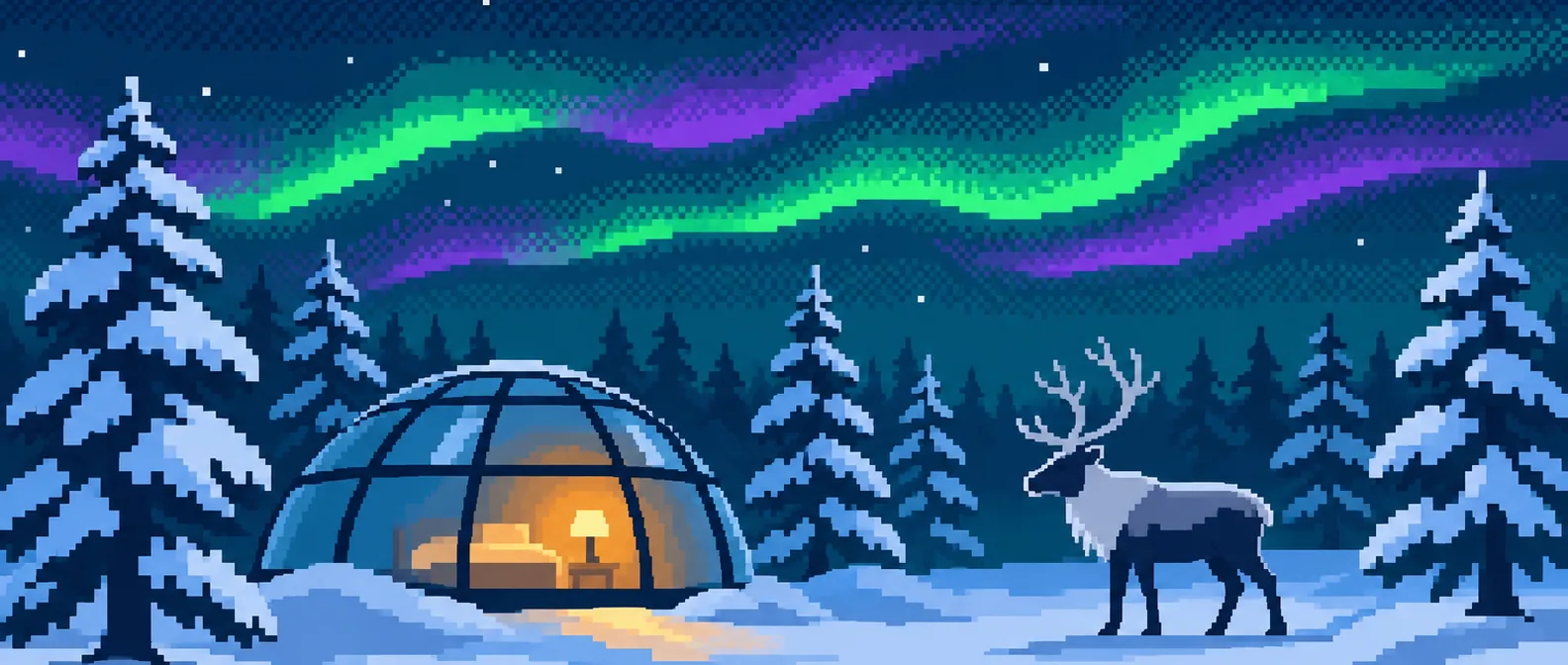 Lapland · 23:15
Northern lights packages are the one outbound product where your clients pay for something nobody can deliver on demand. The hotel, the flights and the husky safari are in your control. The aurora depends on the sun, the cloud and the clock, and a client who flies halfway across the world to stare at grey sky will blame the agent who sold the trip.
This guide covers picking the base, routing the visa, costing the trip, and putting the no-guarantee conversation in writing before the advance lands.
When the aurora season actually runs
Aurora trips sell from roughly late August or September to March or early April, because the lights need a dark sky. The equinox months tend to be most active and midwinter gives the longest nights. Clear weather matters more than either.
| Region | Season, per the official tourism body | Best hours they cite |
|---|---|---|
| Finnish Lapland | Late August to early April | About 9 pm to 2 am |
| Northern Norway | Late August to late March | Often 11 pm to 2 am |
| Iceland | September to April | No fixed best time |
Sources, as of November 2026: Visit Finland, Visit Norway, Visit Iceland.
Visit Finland puts Lapland at roughly every other clear night between August and April, and calls clouds the most common reason people miss the lights. Visit Norway, Visit Iceland and Visit Rovaniemi all say plainly that sightings are not guaranteed. Quote them to your client; it lands better than your own disclaimer.
Careful: "Every other clear night" is not "every other night". In a week of solid cloud the count is zero. Never let a quote compress that into "50% chance".
Darkness shapes the product. In northern Lapland the sun does not rise in the first weeks of January, per Visit Finland, and Visit Rovaniemi lists typical January daytime temperatures of -30 to -15°C against 0 to 10°C in October. An autumn trip sells lakes and milder nights; a January trip sells snow, sledges and deep cold.
The solar cycle, without the hype
NASA and NOAA announced on 15 October 2024 that the sun had reached the maximum period of its 11-year cycle, and NASA expected that phase to last another year or so. On that timeline, winter 2026-27 sits at or past the tail of the peak, though NASA notes significant storms often occur in the declining phase.
So do not sell "once in 11 years" urgency. Solar activity raises the odds of a strong display; it does nothing about cloud. The nightly picture matters more: the Finnish Meteorological Institute publishes a map of current aurora probability from its latest observations, and the Icelandic Met Office publishes cloud cover alongside a 0 to 9 activity forecast.
Lapland, Tromsø or Iceland: three different products
What you are really choosing is the daytime trip around the nights.
| Base | What you are selling | Watch out for |
|---|---|---|
| Rovaniemi, Saariselkä | Snow, cabins, glass-roof nights, family winter | Inland cold; premium rooms buy a view, not a sighting |
| Tromsø | City base, evening chase excursions, coastal voyages | Busy in winter; most international flights connect via Oslo |
| Iceland | Landscapes by day, aurora at night | Must be the longest stay to file there; winter roads |
Finnish Lapland. Rovaniemi is the easy first-timer base, with Christmas appeal for families and many glass-roofed cabins that Visit Finland catalogues. Saariselkä and Inari sit further north, and Visit Finland stresses that distance from artificial light matters as much as latitude, so a split stay is an easy upsell. Sell the glass igloo as one night of experience, not the aurora plan: if that night is cloudy, the client paid for a nice room. The real hunting happens on guided excursions and at aurora camps away from town lights, where a guide can move to clearer sky.
Tromsø. Visit Norway calls it the main hub for northern lights trips, then warns it gets very busy in winter. Its Tromsø page notes most international flights change at Oslo, so price that connection. The product is a town hotel plus evening minibus excursions, or a coastal voyage towards Kirkenes.
Iceland. It suits clients who want dramatic landscapes by day and are relaxed about the nights.
Which Schengen consulate, and how long it takes
All three are Schengen states, so one short-stay visa covers a multi-country trip. Your client applies to the country with the most nights; if equal, to the country of first entry. As of November 2026 the fee is €90 for adults and €45 for children aged 6 to 12, plus the centre's service charge, per the European Commission. Applications go in no earlier than six months and at least 15 days before travel; processing is normally 15 days, extendable to 45.
- Norway: the Norwegian Embassy in India takes applications through VFS Global by mandatory appointment, then forwards them to the Norwegian Directorate of Immigration. It advises applicants not to pay for bookings before a visa is issued, and says appeals take more than three months.
- Iceland: per the applicant FAQ on the Icelandic government's site, the Embassy of Iceland in New Delhi decides, with intake at VFS centres. The FAQ accepts an application only if Iceland is the longest stay (or first entry on equal stays), recommends applying at least three weeks ahead, and does not refund fees on withdrawal. The FAQ dates from 2020, so confirm the current route with the embassy before filing.
- Finland: the same main-destination rule applies. Confirm the current India application route and rupee fee on the Finnish embassy's pages before briefing clients.
Careful: Do not "adjust" nights on paper to reach whichever consulate has slots, then travel a different route. That mismatch is exactly what consulates question. Change the real trip, or wait for the slot.
For groups, the filing calendar in the Schengen group-tour playbook applies here too. Take Norway's advice about paying before the visa seriously: keep pre-visa payments to refundable holds, get written client consent for any non-refundable cabin deposit, and make your cancellation policy mirror what suppliers refund.
What an "aurora guarantee" really means
No one guarantees the aurora. What gets marketed as a guarantee is a compensation promise with conditions, and the supplier decides when it applies.
The clearest public example is the Havila Voyages Northern Lights Promise, as of November 2026. On its 12-day round voyage (Bergen to Kirkenes and back) departing 1 October to 31 March, a guest who sees no northern lights gets a free 6- or 7-day inside-cabin voyage in the next season's window, to be ordered within a month of returning, with no cash value. The guest must have switched on the onboard alert, and the ship decides whether an event occurred, "regardless of weather conditions and actual visibility".
That free voyage still needs new flights, new leave and possibly a new visa. Before any guarantee or re-run offer goes into a quote, get written answers from the supplier:
- Who decides a sighting happened, and on what evidence?
- Is the remedy a refund, a credit or a retry, and by when must it be used?
- Will a retry fall on a night the client is still there?
- Is a weather cancellation treated differently from "ran, saw nothing"?
Cold-weather gear: what to confirm
Most Indian clients do not own kit for -20°C. Visit Finland's climate page says Lapland winters can reach -30°C and tells travellers to ask their travel provider about clothing for extreme cold. That provider is you, so ask the DMC:
- Is thermal outerwear, including boots and mittens, provided on excursions only or for the whole stay, and in children's sizes?
- If gear is rented separately, what does it cost per day, and can it be prepaid?
- What must the client bring from India (base layers, wool socks, glove liners)?
Put the no-guarantee conversation in writing
Send this with the quote and again with the confirmation. Fill the brackets from your package and the supplier's written terms.
Northern lights: what your package includes, and what it cannot promise

1. The northern lights are a natural event. No one (not us, our partners
   or the hotels) can guarantee a sighting on any night of your trip.
2. A sighting needs solar activity, a dark sky and clear weather together.
3. Your package includes [__] nights in the aurora zone and [__] guided
   aurora excursions on [dates].
4. If the supplier cancels an excursion for weather or safety:
   [rebooked on another night / refunded ₹____ / supplier terms attached].
   No refund is due when an excursion runs and the lights do not appear.
5. The glass-roof room on [date] is a room with a sky view. If that night
   is cloudy, the room charge still applies.
6. Night temperatures in [place] in [month] can fall to [__]°C.
   Warm gear included: [list]. Please bring: [list].
7. Visa: you apply to the [country] consulate as your main destination.
   Processing is normally 15 days and can take up to 45. Before the visa
   decision you pay ₹____ (refundable) and ₹____ (non-refundable).
8. I have read this and understand the northern lights are not guaranteed.

Name: ____________   Date: ____________
Line 4 separates "the supplier cancelled" from "the sky did not cooperate". Line 5 ends the glass-igloo refund argument early. Line 8 turns a chat message into a record.
A worked per-pax costing
Example: Hypothetical, for the arithmetic only. A couple wants 6 nights in Finnish Lapland in January: 3 in Rovaniemi (one in a glass-roof cabin) and 3 in Saariselkä. Your DMC quotes €1,600 per person twin sharing for hotels, transfers, two aurora excursions, a husky safari and thermal outerwear. Assume ₹105 to the euro (use your actual booking-day rate).
- Return economy airfare, one stop: ₹88,000
- Land, €1,600 × ₹105: ₹1,68,000
- Forex buffer, 3% of land: ₹5,040
- Schengen fee €90 × ₹105 = ₹9,450, plus ₹2,550 as a placeholder for the centre's charge: ₹12,000
- Travel insurance (placeholder): ₹3,500
Cost per pax: ₹2,76,540. Add ₹30,000 margin and the sell price is ₹3,06,540 per pax before GST and TCS, about 9.8% of the sell. A fourth Saariselkä night with one more excursion, quoted at €220, adds ₹23,100 per pax. Sell it as a priced option, never a guarantee.
For sizing that buffer, see forex buffers for outbound quotes.
Common questions
Which month is best for a northern lights trip from India?
Visit Finland points to September to October and February to March; Visit Norway names September/October and March/April as the most active. December and January give the longest nights and harshest cold. Pick by what the client wants in daylight: autumn lakes, or snow.
Northern lights guarantee milega kya?
No. No official body guarantees a sighting, and a supplier "guarantee" is a compensation promise, such as a free future voyage, that the supplier controls. Put that in writing before you take the advance.
How many nights should an aurora package have?
There is no official number. A sighting needs a clear night, so more nights in the aurora zone means more chances. Treat three as a practical floor and sell extras as priced options.
The short version
- The season runs roughly late August to early April; Lapland sees aurora on about every other clear night, and no official body guarantees a sighting.
- NASA expected the solar maximum phase to taper about a year after October 2024; sell clear-sky nights and good guides, not "once in 11 years".
- Lapland, Tromsø and Iceland are different products: snow and cabins, a busy hub with chase excursions, or landscapes by day.
- Apply to the consulate of the longest stay (first entry if equal): €90 adult, €45 for a child aged 6 to 12, plus service charge, 15 to 45 days, as of November 2026.
- An "aurora guarantee" is a compensation promise the supplier controls; get its terms in writing first.
- Send the written no-guarantee note with the quote, and sell extra nights as options, never promises.